I was listening to the Eldritch Lorecast episode #118 this morning while walking my dogs, and towards the end of the episode, they touched on a common pain point in many 5e games: the stunned condition. Folks commonly say that it’s a bad terrible no-good thing because you can’t do anything and effectively lose your turn, to which I say… nothing and shrug.
Actually, that’s not entirely true, I have a spiel that I can fall back on, though I usually trot it out to criticize 5e monster design. Monsters in 5e really only do so many things: melee attack, ranged attack, cast a spell, or impose a condition. Anything else is very rare, and due to this limited toolset, tactical combat relies almost entirely on scenario design and the synergistic interactions between PCs, monsters, and the environment. If you drop the PCs and monsters into an open, static battlefield, it’s quite likely to be boring and predictable. Therefore, something like the stunned condition is quite important. It changes things. It shifts the action economy without downing a character entirely. Now, sure, it’s a valid criticism to say that it is often too difficult to remove. That’s fair and designers should be aware of it and consider it in their monster and scenario designs.
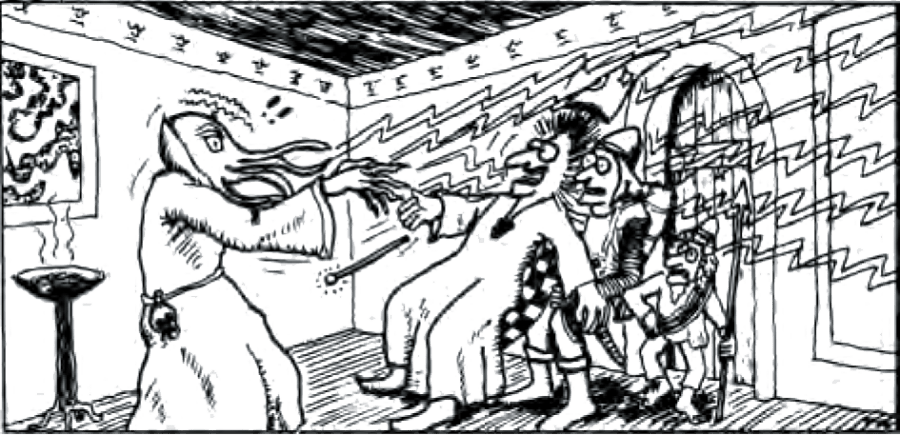
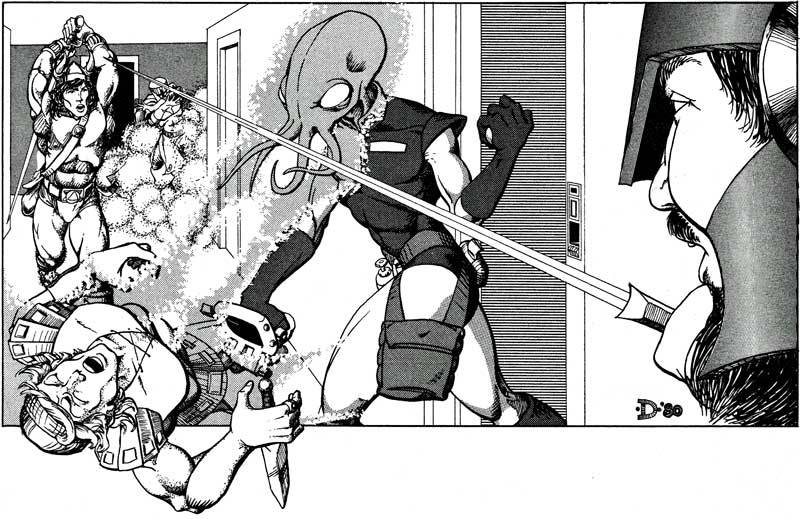
I have three fond memories associated with the stunned condition. For my first Adventurers League game, Fenway Jones, founder of Jasper’s Game Day, was the DM for a late night running of Rrakkma on the evening of the release of Mordenkainen’s Tome of Foes at Ziege Games (the closing of that store still pains me). My githyanki fighter was stunned by a mind flayer and I spent the final encounter failing Intelligence saving throws and watching everyone else run around while they tried to wrap up on time. It honestly didn’t bother me. I was playing a fighter, mind flayers target front line combatants and exploit their low Intelligence scores, and that’s how it goes. I had more pity for the poor character who walked in on a star spawn mangler and was promptly ripped to shreds. The rest of us backed out of the room with shocked expressions on our faces, closed the door, and left their body where it fell.
The second memory is of running Moon 6-2 Troubled Visions at my first Winter Fantasy in 2019. There’s an encounter where a wyvern is guarding a bridge. The monk walked up, stunned it, and someone kicked it over the side of the bridge into the ravine. I was fine with that, because my plan was to pick the characters up one at a time and drop them into the ravine, and since character death is awkward in a con slot, I was happy to avoid it and move along.
I only heard about the third case in feedback for my adventure, DRW-19 Fall the Cold Night. Some folks didn’t appreciate that the bad guy at the end could cast psychic scream because half their party ended up stunned with little recourse. To which I replied, “embrace the fiction: an Elder Evil just came through a portal. It’s pretty reasonable that the sight melted your brain and put you in a state of existential shock.” And you’re level 20 big kids, bring a wish spell or power word heal. Ah well, what can you do.
I think that if lost turns are a major pain point and players are disengaging, then the real problem is that combat is moving too slowly and/or the scenario isn’t demanding their attention. Fix those problems first.
The folks on the Eldritch Forecast felt differently than I do and brainstormed some workarounds for the lost turn. The main line of thought was that conditions are calculated into monster CR as hit point loss, so just convert the stun into an appropriate hit point tax and let the player return to the game. Sure, you can do this, and the math will work. But again, monsters already do so little, and you’re just removing one more thing they can do and reducing the fight to throwing damage against each other’s hit points. At that point, why not just build a matrix of average damage per round versus AC and resistances, calculate how long the fight should take, apply damage according to the matrix, and skip the fight entirely?
Like so many other things, the stunned condition really needs to be used as a tool in the blank space of scenario design. It should matter that a character is stunned, not just as it influences the action economy, but as it relates to the party’s goals. If three switches need to be throw simultaneously to prevent the mind flayer ship from taking off, but that jerk is threatening to stun multiple members, now you’ve got a scenario! Or if the mind flayer is hiding in the back, commanding his grimlock thralls to drag the stunned characters over to have their brains eaten, again, that’s something the players can engage with, and you better believe the stunned character’s player will be paying attention.
The stunned condition has its problems, mostly in how hard it can be to shake off, but losing turns shouldn’t be considered to be one of them. Build better scenarios that make the stun matter. And to put my money where my mouth is, I’ll do that on Friday (if I haven’t been called in for jury duty).

 Proving Grounds of Folkvangr