
I sometimes see people ask questions online like, “How do I make an adventure that fits the story I want to tell?” This is usually followed by a more technical question about the structural challenges they’re facing, or a more subtle question about how to convince their players to follow the path they’re envisioning. While I think it’s possible to make a story-oriented adventure, I think it compromises the game at a fundamental level and in turn creates new problems. You can do it, but you’re making more work for yourself because you’re having to make things happen rather than letting them.
I strongly feel that the most important quality of tabletop role playing games, the thing that made them matter and that differentiated them from every formalized game that preceded them, is emergent play. Emergent play is the complex and often unexpected results of combing the simpler elements of the rules and player choices. In D&D, it’s often expressed as, “you can do anything.” Of course, you can’t do anything, but you can come up with a course of action that is only limited by your imagination and the agreed upon confines of the game world and rule system. You can’t declare that you turn into a dragon, but you can cast a spell or drink a potion that lets you turn into one. Adventures that dictate a course of action fight against the fundamentals of a system built to let you “do anything.”
Written adventures can’t allow for every potentiality. Those that try are doomed to failure, turning into if/then flowcharts that threaten to sprawl out into infinity. The other tact is to limit the potential of the adventure. There is an acceptable amount of that. If you leave Waterdeep, you are no longer playing Waterdeep: Dragon Heist. But the best adventures set up a situation and then get out of the way. They provide the DM with what they need to let things unfold according to the actions of the characters. You don’t need flowcharts or walls, you just need tools.
I ran a fair amount of Adventurers League games for a few years, and what finally broke my brain and made me step away was that I could no longer bear shepherding the players along a predictable path. If I already know what’s going to happen, why play at all? I want to be surprised with the other players! Yes, a four-hour runtime and the desire for a consistent play experience are confines, but there is still room within those boundaries for emergent play. I tried to include as much procedural random generation and unpredictability as I could in the last few AL adventures I wrote, and I’m not the only person to have done so.
Clearly, from the things people say online, people often run into problems with linear adventures and can’t always accurately identify the root cause. Last summer, someone was telling me how much they were enjoying the Wild Beyond the Witchlight while dreading returning to their Call of the Netherdeep campaign, despite having come to D&D via Critical Role. The crucial difference is that Witchlight, while having an overall linear structure, allows for a lot of room for emergent play within that structure. It isn’t fragile. If the players do something weird, it’s easy for the DM to figure out how the game world should react and change. Netherdeep has a famous scene where the PCs have to fight a shark and get it to break down a wall, or something like that, and the person I was talking to asked, “How am I supposed to get them to do that?” A good adventure should never make the DM say, “How am I going to get them to do that?”
Some players feel safe on a path and enjoy figuring out what they’re supposed to do and how to do it. That really is fine (despite these many paragraphs laying out the case against it) and I’m not here to police anyone’s fun. I just think it’s a shame and a missed opportunity if people play D&D and never get to experience feeling like they really can “do anything.” It’s magical, and it can carry over into our outside lives. People live with so many confines put upon them, and it breaks my heart when I hear some say, “I didn’t know I could be anyone other than who I was expected to be.” Of course you can, what else are you going to do? Make your own life before you die!
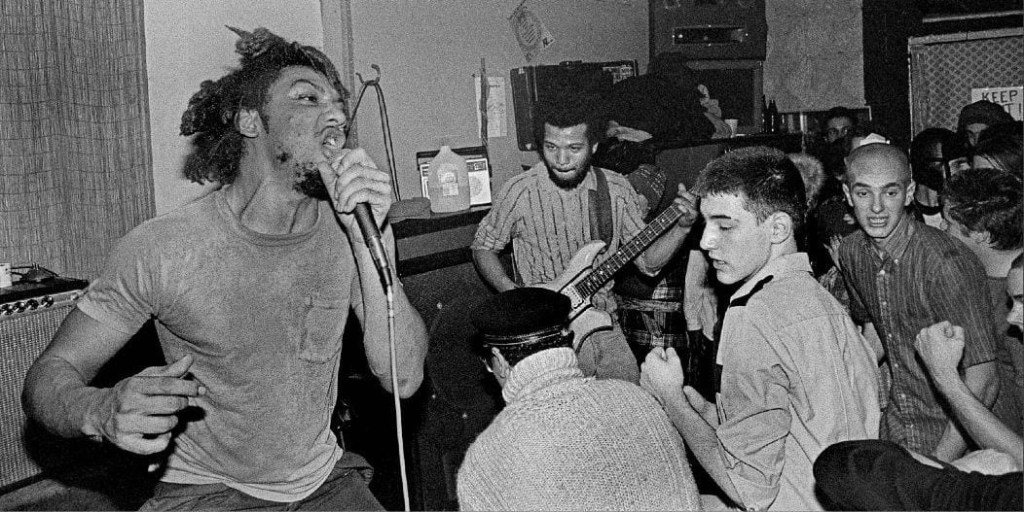
I’d like to be what they would not want me to be”
I get bristly when people describe D&D as “collaborative story-telling” or anything along those lines. It’s an experience-creation engine, and a narrative can be constructed afterwards from those experiences, but it usually has as much literary quality as a retold dream, and as much entertainment value. If you’ve ever listened to someone telling you about their campaign, you know what I mean. If you have a story to tell, this might be the wrong medium for it.
I’m sure it’s obvious by now, but I don’t prep a story for a my home game. I only prep for the week’s likely events and even then, I like to rely on procedural generation at the table as much as possible. This minimizes my prep and maximizes both my surprise at what emerges and how much room my players have to roam. The only downside I can see to that is that I’m not setting up deftly-orchestrated narrative arcs that pay off after weeks or months of play. But my players are doing that instead. They decide on a goal and work toward it, and I think it achieves a similarly satisfying effect. Sure, I daydream about things that could happen down the line, but I don’t hold on to them too tightly. It’s a relief to let go, and less work!
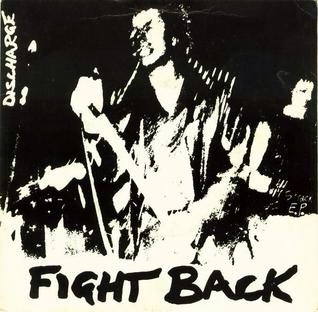
So in conclusion, I suggest rejecting Discharge’s maxim of fighting back and instead embrace the system. Ironically live the chaos by following the rules!

 Proving Grounds of Folkvangr
Pingback: Looking Back: The Barovian Book of the Dead – Proving Grounds of Folkvangr